
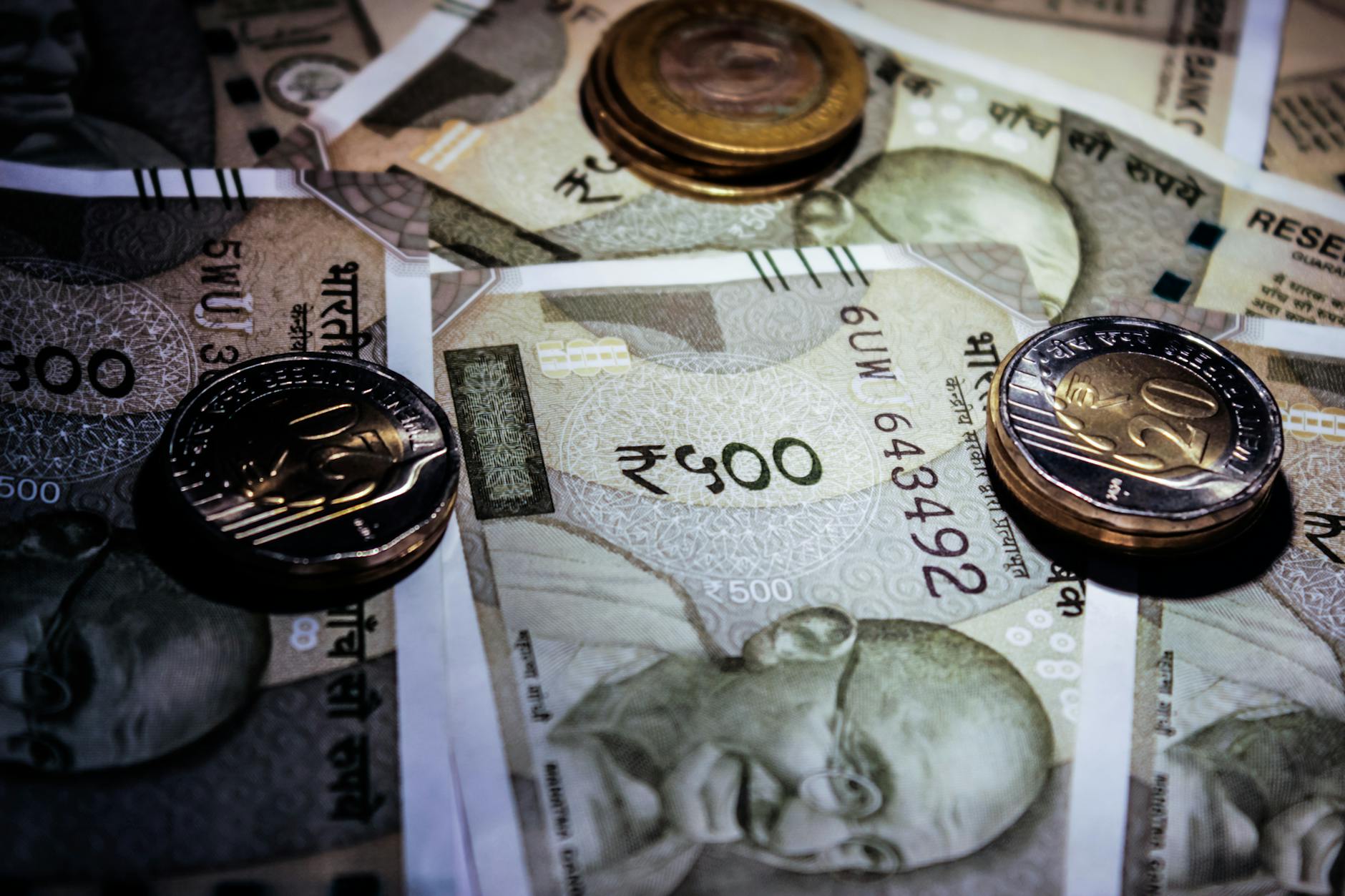
India's Economy Remains Strong Despite Rupee Volatility at ₹82.50
Economic growth and investor confidence persist amid currency fluctuations.
BULLISH· HIGH

India's economy has shown remarkable resilience despite fluctuations in the value of the Indian rupee. The rupee's performance against major currencies has raised concerns among analysts, yet overall economic indicators suggest a robust growth trajectory. Currently, the Indian rupee is trading at approximately ₹82.50 against the US dollar, reflecting significant volatility. This fluctuation is largely attributed to global economic factors, including rising oil prices and shifts in US monetary policy. However, experts believe that the rupee's decline does not directly reflect India's economic health. Several factors have contributed to the rupee's fluctuations. The surge in global oil prices has put pressure on the rupee, given India's status as a major oil importer. Additionally, changes in interest rates and monetary policy by the US Federal Reserve have led to capital outflows from emerging markets, including India. Despite the rupee's decline, India's GDP growth remains strong, with projections indicating a growth rate of 6-7% for the current fiscal year. India's economic fundamentals continue to attract both domestic and foreign investors. The government's focus on infrastructure development, digital transformation, and ease of doing business has created a conducive environment for investment. Recent Foreign Direct Investment (FDI) inflows have reached record levels, particularly in technology and renewable energy sectors. The Indian government has implemented several initiatives to bolster economic growth, including the Production-Linked Incentive Scheme aimed at boosting manufacturing and attracting foreign investment. The Digital India Initiative focuses on enhancing digital infrastructure and promoting technology-driven solutions. The National Infrastructure Pipeline, an ambitious project, aims to invest ₹111 lakh crore in infrastructure development by 2025. Looking ahead, analysts remain cautiously optimistic about the rupee's performance. While short-term fluctuations may persist, the long-term outlook for the Indian economy remains positive. Strong fundamentals, a growing middle class, and ongoing reforms are expected to support the rupee's recovery. Economists suggest that maintaining fiscal discipline and effective monetary policy will be crucial in stabilizing the rupee. According to Dr. Raghuram Rajan, former Governor of the Reserve Bank of India, the resilience of the Indian economy will ultimately reflect in the stability of the rupee as long as structural reforms continue. In conclusion, while the Indian rupee faces challenges, the underlying strength of India's economy provides a solid foundation for future growth. The government's proactive measures and the resilience of the business sector are likely to mitigate the impact of currency fluctuations, ensuring that India remains an attractive destination for investment. Based on reports from Google News — Indian Economy.
Impact analysis
BULLISHThe strong economic fundamentals may boost investor confidence in Indian markets. The rupee's stabilization is crucial for attracting foreign investments.
- →Rupee fluctuations may impact import costs and inflation.
- →Strong GDP growth projections can attract more foreign investment.
- →Government initiatives could enhance market sentiment.
Stocks:RELIANCETCS
Sectors:BFSIIT
Horizon: long term
What to watch next
Monitor upcoming economic data releases and global oil price trends to gauge potential impacts on the rupee.
Frequently asked
What factors are causing the rupee to fluctuate?+
The rupee's fluctuations are influenced by global oil prices, US Federal Reserve policies, and domestic economic indicators.
How is the Indian economy performing?+
The Indian economy is projected to grow at 6-7% this fiscal year, indicating strong fundamentals.
Based on reports from Google News — Indian Economy.
More in Economy
View all →
Impact of US-Iran War on India's Economy and Stability
10h ago

India's Economic Stability at Risk Amid US-Iran Tensions
10h ago
India Faces Economic Challenges Amid Ongoing US-Iran Conflict
10h ago

Impact of US-Iran War on India's Economic Stability
10h ago
India Faces Economic Crisis Amid US-Iran Tensions
10h ago

India Emerges as a Solar Superpower with Skilled Workforce
22h ago